
Ashwagandha: A Root for Resilience
Some plants announce themselves loudly. Others work quietly, steadily, beneath the surface. Ashwagandha (Withania somnifera) belongs firmly in the second camp.
Often described as an adaptogen, ashwagandha has a long history of use in Ayurvedic traditions as a grounding, nourishing root, one that helps the body find its footing during times of stress, depletion, and transition. We like to think of it less as a stimulant or quick fix, and more as a steadying presence, the botanical equivalent of putting your feet back on the ground.
A Brief History of Ashwagandha
Ashwagandha has been used for thousands of years across India, North Africa, and the Middle East. Its name roughly translates to “the smell of a horse,” a reference not only to the scent of the fresh root but to its traditional association with strength, vitality, and endurance.
In classical herbal systems, ashwagandha was considered a rasayana, a restorative plant used to support longevity, resilience, and overall vitality. Rather than targeting one specific system, it was used to support the whole person.
Why Grow Ashwagandha?
Ashwagandha is most often encountered as a powdered root or tincture, but growing it yourself creates a completely different relationship with the plant.
It thrives in summer heat, making it well-suited to Southern gardens.
It asks for patience, spending much of the season quietly developing its roots.
It teaches timing, harvested in the fall once the plant has completed its cycle.
For us, growing ashwagandha is an exercise in trust. You won’t see much happening above ground for a while—but beneath the soil, the real work is underway.
Ashwagandha & Stress Support
Ashwagandha is perhaps best known for how it supports the body during periods of stress. Rather than revving things up, it’s traditionally used to help regulate the stress response, supporting calm energy, emotional steadiness, and restful sleep.
This makes it especially beloved during seasons of:
Mental overload
Emotional transition
Physical depletion
Long-term stress
It’s not about numbing or escaping stress, but about building capacity, helping the body respond with a little more ease.
A Note on Whole-Plant Relationship
At Trefoil Gardens, we believe plants are more than a list of benefits. Growing, harvesting, and working with ashwagandha invites a slower pace and a deeper kind of listening. The root reminds us that strength doesn’t always look like productivity, it often looks like rest, nourishment, and consistency.
We grow our botanicals with care, harvest in small batches, and prioritize freshness and relationship over scale. Whether you’re meeting ashwagandha as a living plant, a dried root, or a tincture, our hope is that it becomes a quiet ally in your daily rhythm.
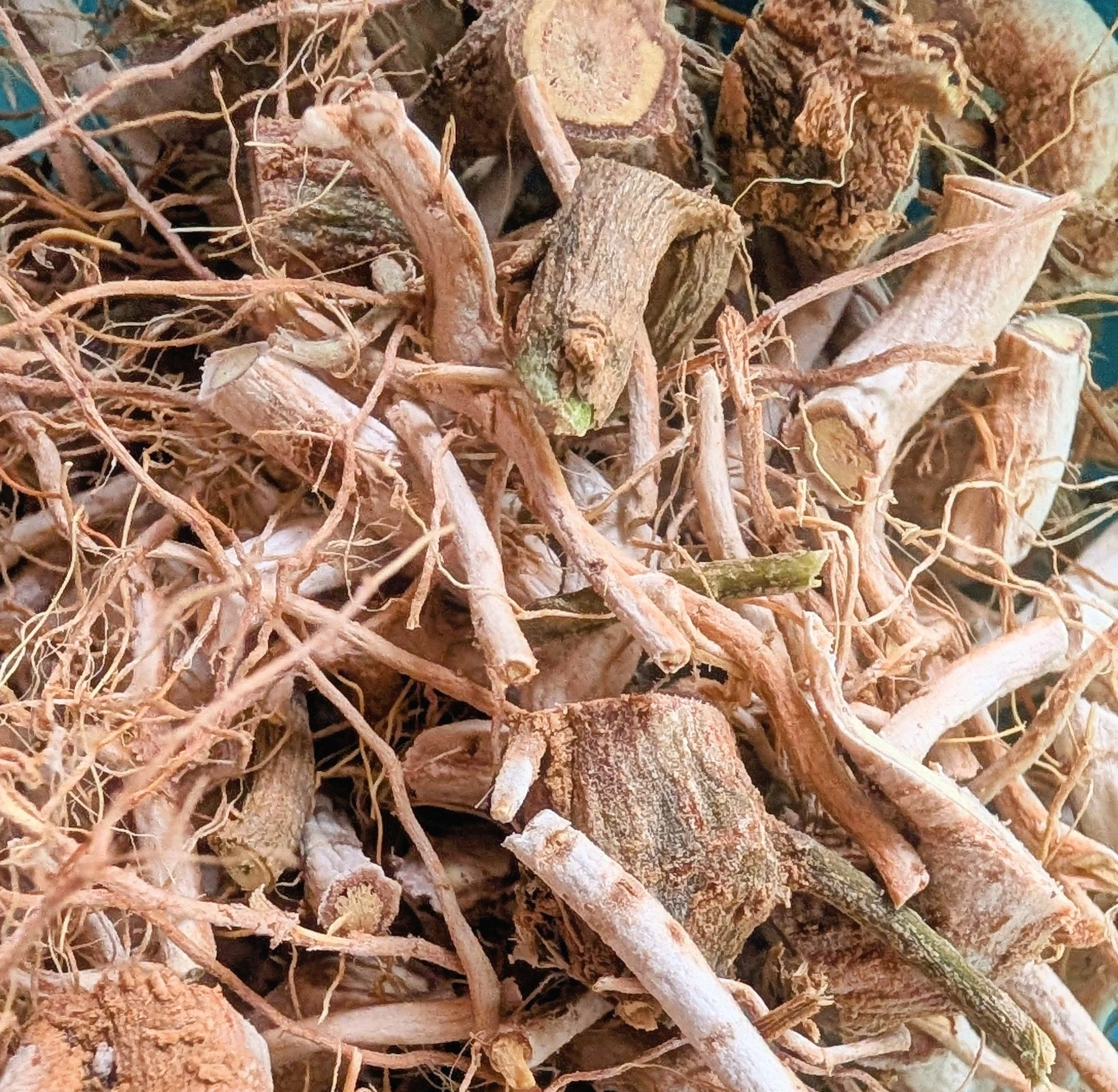
Ashwagandha Root at Trefoil Gardens